
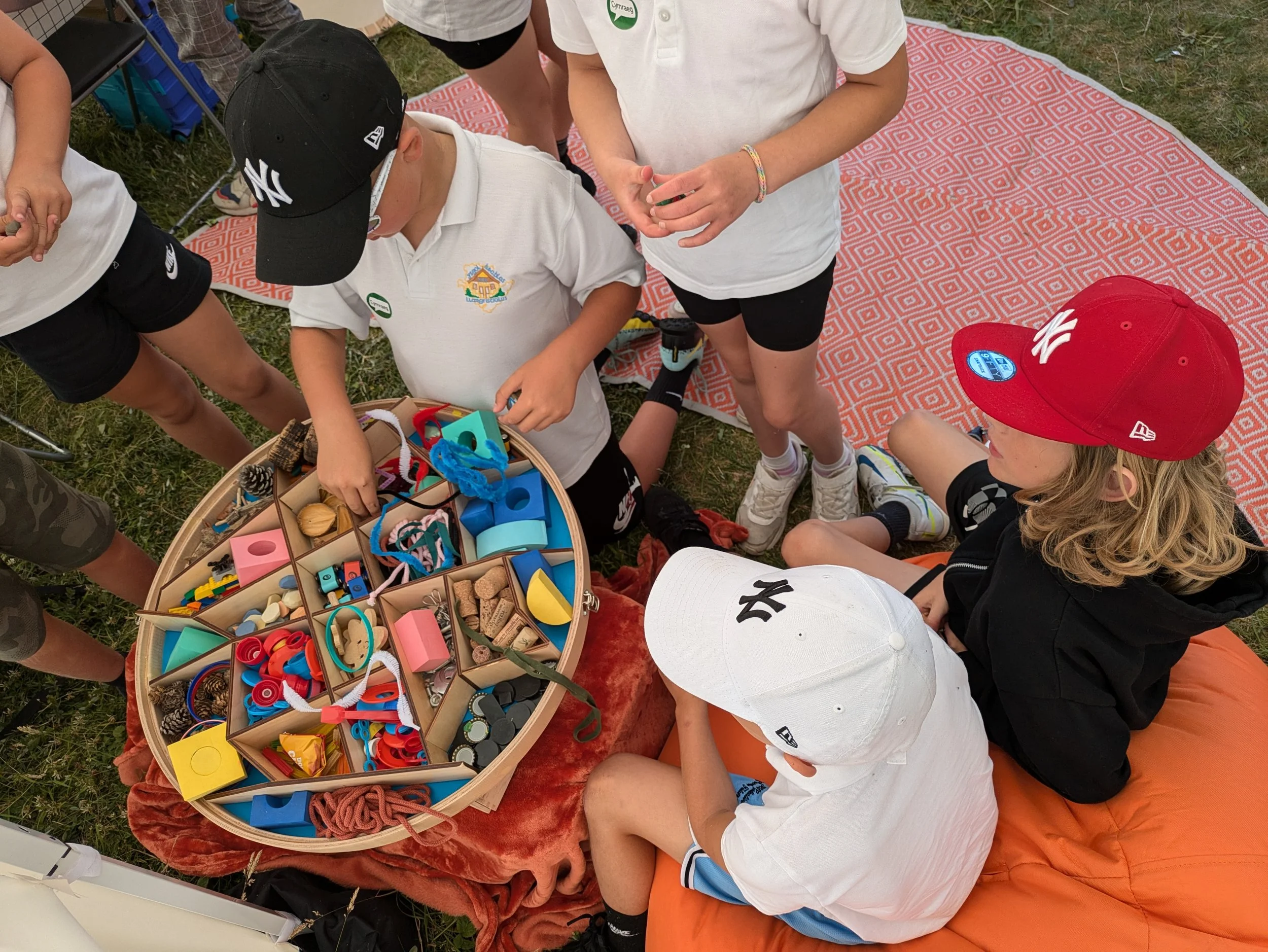
Play Disrupt is a public engagement studio, using playful methods to engage people in decisions about where they live. Since 2023, we have been co-investigators on Public Map, an Arts and Humanities Research Council research initiative led by Cambridge University to make places in the UK better for the people who live there. Working with young people on the Isle of Anglesey (Ynys Mon) we have co-created innovative mapping methodologies to support them to convey their connection to place.
We were delighted to jointly win a TET Inspire Future Generations Award 2025 in Materials Resources and Research for our work on Public Map, alongside fellow winner Dinah Bornat.
As part of Public Map, we’ve been working with over 400 young people across Anglesey, co-designing a playful, accessible way for young people to map their places. This brief led us through a process that invited young people to create animated symbols and place them on a digital map of their local area. In this article, we’ll be sharing our learnings from this journey.
From the beginning, our approach was rooted in the following pillars:
Creative
Experience-based and theatrical
Iterative
Flexible
Person-centred
Involving young people whose experiences might otherwise be overlooked was central to our mission on the project. We found that dropping in to youth clubs to have initial informal chats, calling up youth groups, and being introduced to key community contacts through Anglesey-based staff at Public Map, gave us a way into working with groups outside of traditional school settings.
Language was another important factor in recruitment and delivery of workshops. We found that having a fluent Welsh speaker on the team meant that we could more quickly make local connections, and offer inclusive bilingual workshops that allowed input in whichever language children preferred. In many cases, they felt more comfortable and could express their thoughts more openly in Welsh.
Symbology: Bringing digital maps to life with young people
By Nia evans, Engagement Producer, Play:Disrupt
“A key learning from the project was the importance of flexibility; being ready to adapt to individual participants’ needs, and to changing the process to incorporate new ideas as they arise. Two major breakthroughs happened in response to participants interacting with the process in unexpected ways.”
We initially used theatrical storytelling and physical making as a way into the activity, inviting participants to represent themselves and intangible aspects of their area on the map (evoking the senses, and feelings or relationships related to a place). This creative process was then developed through a series of iterative workshops with children at youth clubs, girlguides sessions, and young carers groups, gaining feedback from them and adapting the sessions as we went.
A key learning from the project was the importance of flexibility; being ready to adapt to individual participants’ needs, and to changing the process to incorporate new ideas as they arise. Two major breakthroughs happened in response to participants interacting with the process in unexpected ways. One child at a youth club session initially refused to engage, as he said that what we offered was ‘not my type of animation.’ When asked about his favourite way to animate, he went away and drew for a while, before returning with a beautiful sketched animation of a boat he had created using an online animation tool called FlipaClip. This then became our main tool for following workshops.
At a later workshop, a child was unsure about participating in the animation, and so we offered an alternative activity; to place his peers’ animated symbols on to the map, and walk us through the map he had made. Other children immediately recognised their own experiences in his map as he showed it to the group, and we decided to incorporate this activity as a key part of the process. If children are making the symbols, then they should also be in charge of placing them, and sharing the story of their maps.