
Much of my early career was focused on school buildings. I worked on school estates policy, managed participatory school design national demonstration programmes, researched exemplar school designs from around the world, and developed outline briefs for new and refurbished schools at a time when government investment was framed as transforming education for the future.
Over time, my focus shifted. I remain interested in transformational learning environments, but my attention has moved beyond the school gate — into parks, green spaces, and the wider public realm.
This shift has been shaped by working with schools as experiential and play-based learning has gained legitimacy as pedagogy. As play becomes more widely recognised for its contribution to engagement, retention, wellbeing, and social development, the limitations of conventional classrooms become harder to ignore. Our classrooms were never intended for sustained movement, collaboration, role-play, or sensory learning. School grounds are often tightly timetabled and managed around specific functions, leaving little room for extended or exploratory learning.
As experiential and play-based pedagogy becomes more embedded in mainstream education, it is reasonable to expect that more schools will look beyond their own sites for environments that can properly support it. Increasingly, that search leads to parks — and to my mind, that is a positive development.
Parks are often described as “natural” spaces, but they are in fact carefully designed and managed built environments. Sitting between the city and the natural world, they function as liminal spaces that intentionally connect urban communities to the ecological systems that sustain life. This hybrid quality is one of the reasons parks are such powerful learning environments: they allow children to encounter nature and engage — including through play — with the real world not as abstract concepts, but as an immediate and meaningful part of their own lives.
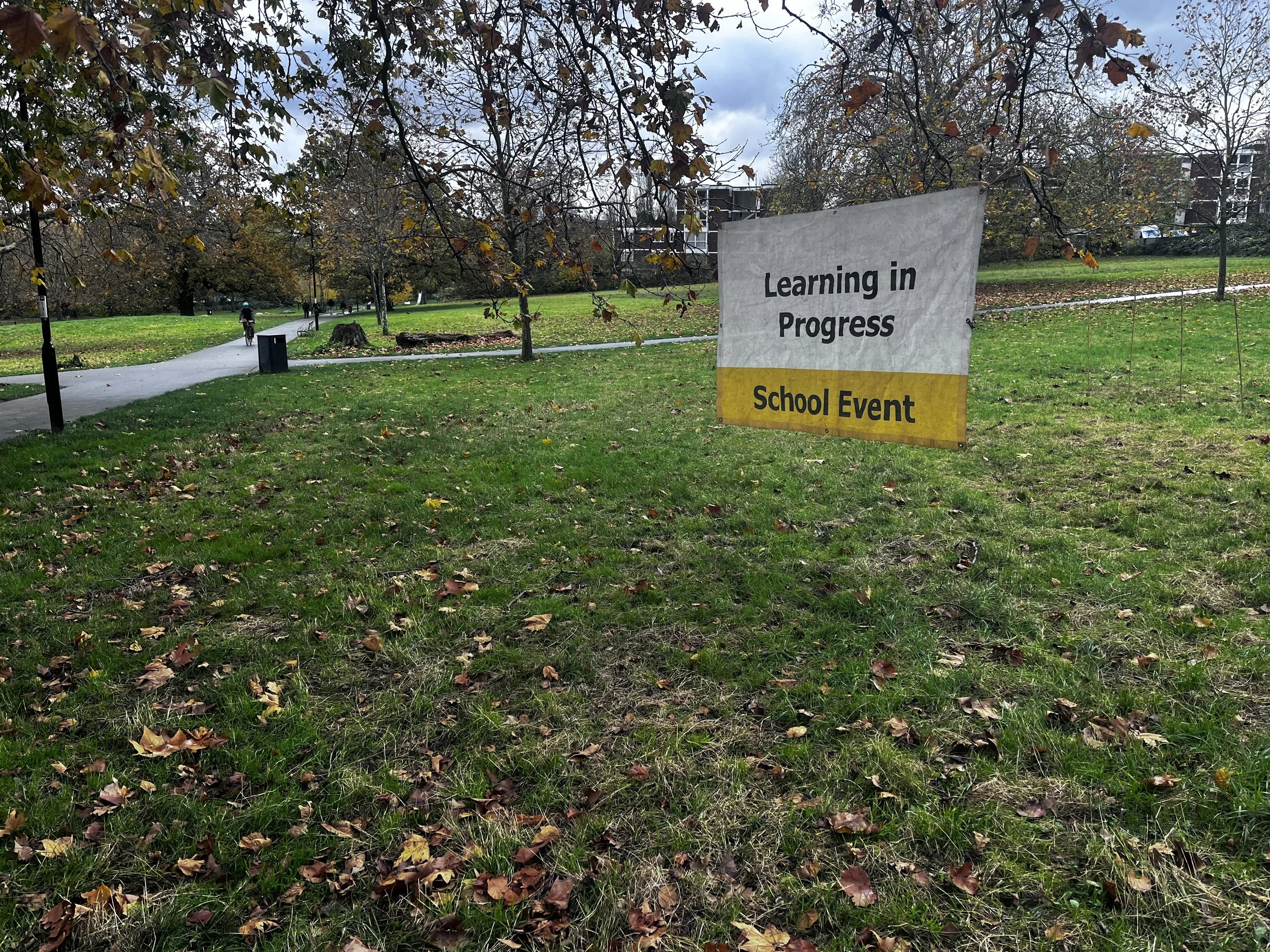
My work focuses on curriculum-focused adventure learning, using experiential and play-based approaches to teach statutory curriculum content in park settings. Parks are not used despite play, but through direct immersive experience and play - role-play, team challenges and other play-based activities, problem-solving, physical activity as well as discussion, and reflection. Curriculum objectives remain explicit, but learning is embodied and memorable.
From School Buildings to Urban Parks: Reflections on Place, Play and Engagement
By Hugh Dames, Lead, Adventure Learning
“Putting more school learning into our urban parks places child wellbeing and development, learning, connection with nature, and care for shared green spaces at the heart of community life.”
This approach aligns closely with research from Harvard’s Project Zero, particularly work exploring the relationship between purpose, practice, and place. Project Zero’s Designing Learning Paths framework encourages educators to look beyond the classroom and consider how learning can happen at, with, of, and through places in the local environment. Parks, shaped by ecological, historical, and social forces, are therefore not simply alternative settings for learning, but active components of pedagogy in their own right.
Working in parks also reshapes engagement between schools, families, and communities. When schools regularly use their local parks for learning, pupils often return with parents to show them what they explored or created. In this way, schools help place learning, connection with nature, and care for parks at the heart of community life. Parks also provide the physical and imaginative space that supports movement, collaboration, and exploratory play-based learning in ways that are just not possible within conventional classrooms.
There are challenges — toilets, dogs, bikes, supervision, and teacher confidence all affect what is possible. However, over more than a decade of delivering park-based curriculum learning, I have found that safety and confidence develop through regular use, clear routines, and shared expectations, rather than restriction.
Looking back, the move from school buildings to parks feels less like a change of direction and more like a widening of perspective. Putting more school learning into our urban parks places child wellbeing and development, learning, connection with nature, and care for shared green spaces at the heart of community life.
I was very pleased to receive a commendation recognising how my work helps create healthier spaces. I commend TET for providing individuals and organisations with the opportunity to share their work with a wide and influential audience. I hope this recognition helps encourage more people to re-imagine our urban parks as learning spaces.